
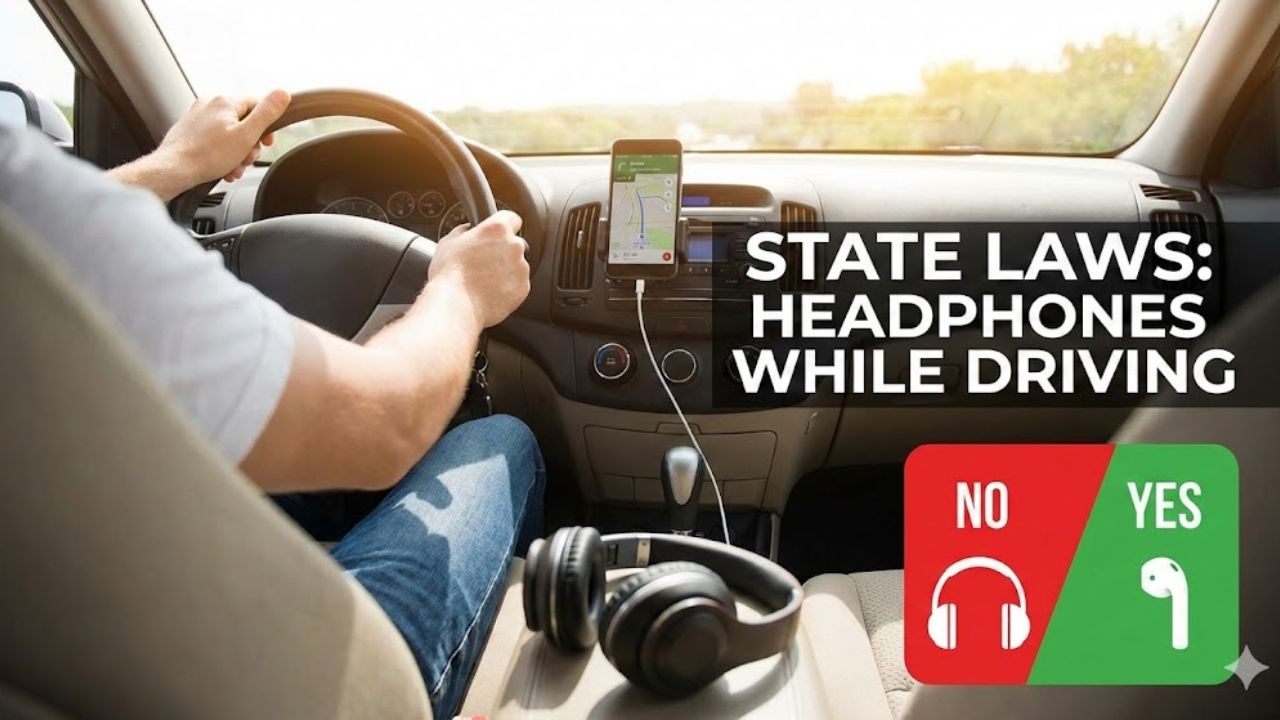
As we move through 2026, the integration of technology into our daily commutes has never been more seamless. From wireless earbuds to noise-canceling headsets, many drivers prefer their personal audio over a traditional car stereo. However, the legal landscape surrounding this practice is far from uniform. While some drivers assume that “hands-free” automatically means “legal,” the reality is that state laws vary wildly. Understanding your rights and responsibilities is essential to avoid hefty fines, insurance hikes, or even criminal charges for distracted driving.
The Spectrum of Headphone Legality
Across the United States, laws regarding headphones fall into three primary categories: fully legal, strictly prohibited, or legal with specific limitations. In roughly 33 states, including Alabama, Texas, and Michigan, there are no explicit statutes forbidding a driver from wearing headphones. Conversely, states like California and Maryland have long maintained strict bans. These laws are primarily rooted in safety; your hearing is a secondary “radar” that detects sirens, screeching tires, or car horns. When you isolate your auditory senses, you significantly increase your reaction time to environmental hazards.
States with Strict Bans
In the most restrictive jurisdictions, wearing headphones or even modern earbuds in both ears is a ticketable offense. States like Alaska, California, Louisiana, Minnesota, Virginia, and Washington generally prohibit any device that covers or is inserted into both ears. In these regions, law enforcement can pull you over specifically for this violation. For example, in California, a citation for wearing dual earbuds can result in a fine of nearly $200 and a point on your driving record. Accumulating these points can eventually lead to a license suspension, making it a costly habit for those who value their music over road awareness.
One-Ear Exceptions and Nuances
Many states have adopted a “middle ground” approach, acknowledging that drivers use earpieces for communication or GPS navigation. In states such as New York, Florida, and Illinois, it is legal to wear a single earbud, provided the other ear remains uncovered. This ensures the driver can still hear emergency signals. Some states add even more specific layers: in Georgia and Pennsylvania, a single earbud is only permitted if used for phone communication, meaning listening to music through one ear could technically still land you a citation.
State-by-State Quick Reference Guide (2026)
| State | Status | Notable Exceptions/Details |
| California | Illegal | Prohibits both ears; bicyclists must also comply. |
| Florida | Restricted | One earbud allowed for phone calls only. |
| New York | Restricted | Single earbud allowed for any audio purpose. |
| Texas | Legal | No specific ban, but may face “distracted driving” charges. |
| Virginia | Illegal | Ban on both ears; includes headsets and earplugs. |
| Massachusetts | Restricted | One earbud permitted for GPS navigation only. |
| Ohio | Restricted | Single earbud allowed; exceptions for emergency workers. |
Distracted Driving and Liability
Even in states where headphones are technically legal, you aren’t necessarily “in the clear.” If you are involved in a collision while wearing headphones, a personal injury attorney or an insurance adjuster may use that fact as evidence of negligence. In legal terms, this falls under “failure to maintain a proper lookout.” If a court determines that your music prevented you from hearing a hazard, you could be found primarily at fault, regardless of who hit whom. This can lead to denied insurance claims or a significant increase in your monthly premiums.
Modern Tech vs. Old Laws
As technology evolves, the lines become even blurrier. Bone conduction headphones, which sit outside the ear canal, are a growing trend in 2026. Because they do not “plug” the ear, some argue they bypass traditional bans. However, most statutes refer to “headsets” or “listening devices” broadly. If the device distracts your cognitive focus, most officers have the discretion to issue a citation for inattentive driving. The safest bet is always to utilize your vehicle’s built-in Bluetooth system, which allows for full situational awareness while keeping your hands on the wheel.
Summary for the Responsible Driver
The freedom of the open road often comes with a soundtrack, but it should never come at the cost of safety. Whether you are navigating the busy streets of New York or the highways of Texas, staying informed on local regulations is your best defense. If you must use headphones, the “one-ear rule” is the safest standard to follow nationally. By keeping one ear open to the world around you, you protect your legal rights, your wallet, and—most importantly—the lives of others sharing the road.
FAQs
Q1 Are AirPods illegal to wear while driving?
In states like California and Virginia, wearing both AirPods is illegal. In states with single-ear exceptions, you may wear one, but wearing both can result in a distracted driving citation.
Q2 Can I get a ticket for headphones in a state where it’s legal?
Yes. If an officer believes the headphones caused you to drive erratically or fail to hear an emergency vehicle, they can cite you for “careless” or “inattentive” driving.
Q3 Do these laws apply to bicyclists too?
In several states, including California and Florida, bicyclists are subject to the same headphone restrictions as motor vehicle drivers to ensure they remain aware of surrounding traffic.
Disclaimer
The content is intended for informational purposes only. you can check the officially sources our aim is to provide accurate information to all users


