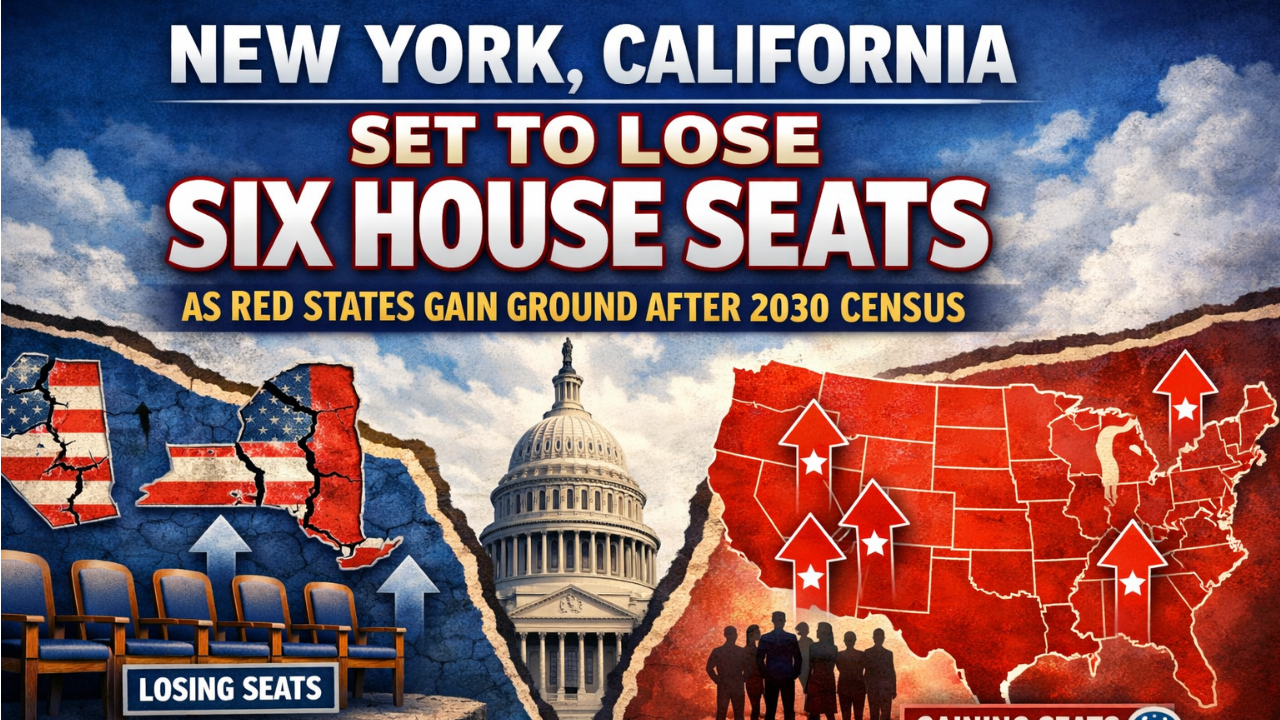
New York and California stand to lose a combined six seats in the U.S. House of Representatives following the 2030 Census, handing gains to fast-growing red states like Texas and Florida. This shift stems from stark population trends, with blue strongholds stagnating while Sunbelt regions boom with new residents. Election experts see this reshaping congressional power ahead of the 2032 cycle, amplifying Republican advantages in key battlegrounds.
Population Shifts Drive the Changes
America’s demographic map keeps evolving, pulling political clout southward and westward. New York, once a powerhouse with 45 House seats in the 1940s, now clings to 26 and could drop to 24 by 2030 due to slow growth and out-migration. California, the nation’s most populous state at 52 seats, faces an even steeper cut to 48 as high costs push families elsewhere. Meanwhile, Texas surges from 38 to 42 seats, fueled by 2.5 million new residents since 2020, while Florida climbs from 28 to 32.
These projections come from Carnegie Mellon redistricting specialist Jonathan Cervas, whose analysis using 2025 Census data highlights the Empire State’s long decline. Critics blame Democratic policies in Albany and Sacramento for failing to retain jobs and families amid rising taxes and regulations. Red state governors tout business-friendly climates drawing transplants from overcrowded coasts.
Projected House Seat Changes Post-2030
| State | Current Seats | Projected Seats | Net Change |
|---|---|---|---|
| New York | 26 | 24 | -2 |
| California | 52 | 48 | -4 |
| Texas | 38 | 42 | +4 |
| Florida | 28 | 32 | +4 |
| Illinois | 17 | 15 | -2 |
| Utah | Varies | Small gain | +1 |
Political Ripples in Congress
Losing seats means blue states surrender committee spots, leadership roles, and votes on everything from budgets to border security. Democrats already grapple with a slim House majority; this tilt could solidify GOP control through the decade. New York’s drop compounds losses from the 2020 redistricting, where courts tossed partisan maps favoring liberals.
Experts like Jeff Wice from New York Law School call it grim news for coastal Democrats, warning of worse if President Trump’s administration adds a citizenship question to the 2030 Census. Such a move might undercount undocumented residents in sanctuary states, shrinking their apportionment further despite constitutional mandates to count all persons. Republicans counter that legal citizens deserve fair representation without inflated tallies.
Red States Ride the Growth Wave
Texas and Florida exemplify Sunbelt success, luring workers with no state income tax, ample housing, and jobs in tech, energy, and logistics. Their gains add Electoral College votes too, tilting presidential math toward the GOP. Idaho and Utah snag smaller boosts, rounding out a pattern where conservative governance correlates with population magnets.
This isn’t sudden—California shed one seat after 2020, and New York two. But accelerating outflows from remote work and urban crime have sharpened the divide. Political operatives in red states already eye gerrymandering opportunities to lock in safe districts.
Challenges for Blue State Leaders
Governor Kathy Hochul faces backlash as New York’s exodus hits suburbs and upstate towns hardest. High taxes, crime, and remote work options send families to lower-cost havens. California’s Gavin Newsom battles similar woes, with tent cities and blackouts chasing out middle-class earners.
Reversing trends demands bold reforms like tax cuts or deregulation, moves clashing with party orthodoxies. Some Democrats push for federal aid to offset losses, but fiscal hawks in Congress block such bailouts.
Electoral College Shakeup Looms
House reallocations directly boost red state presidential heft—Texas and Florida could gain five or six electors combined. This hardens the map against Democrats, who rely on urban turnout in fading blue bastions. Midterm redistricting battles will intensify, with courts likely refereeing disputes.
Voters in shrinking states feel the squeeze through reduced federal funding tied to representation. Sunbelt booms strain infrastructure but promise economic vitality.
Long-Term Power Realignment
By 2030, the House could tilt 10 seats redder, cementing divides on immigration, spending, and climate policy. Blue states must adapt or watch influence wane further.
FAQs
Q1: Why are NY and CA losing seats?
Stagnant populations versus Sunbelt growth.
Q2: Which states gain most?
Texas (+4) and Florida (+4).
Q3: Does this affect presidents?
Yes, via Electoral College shifts.
Disclaimer
The content is intended for informational purposes only. Check official sources; our aim is to provide accurate information to all users.